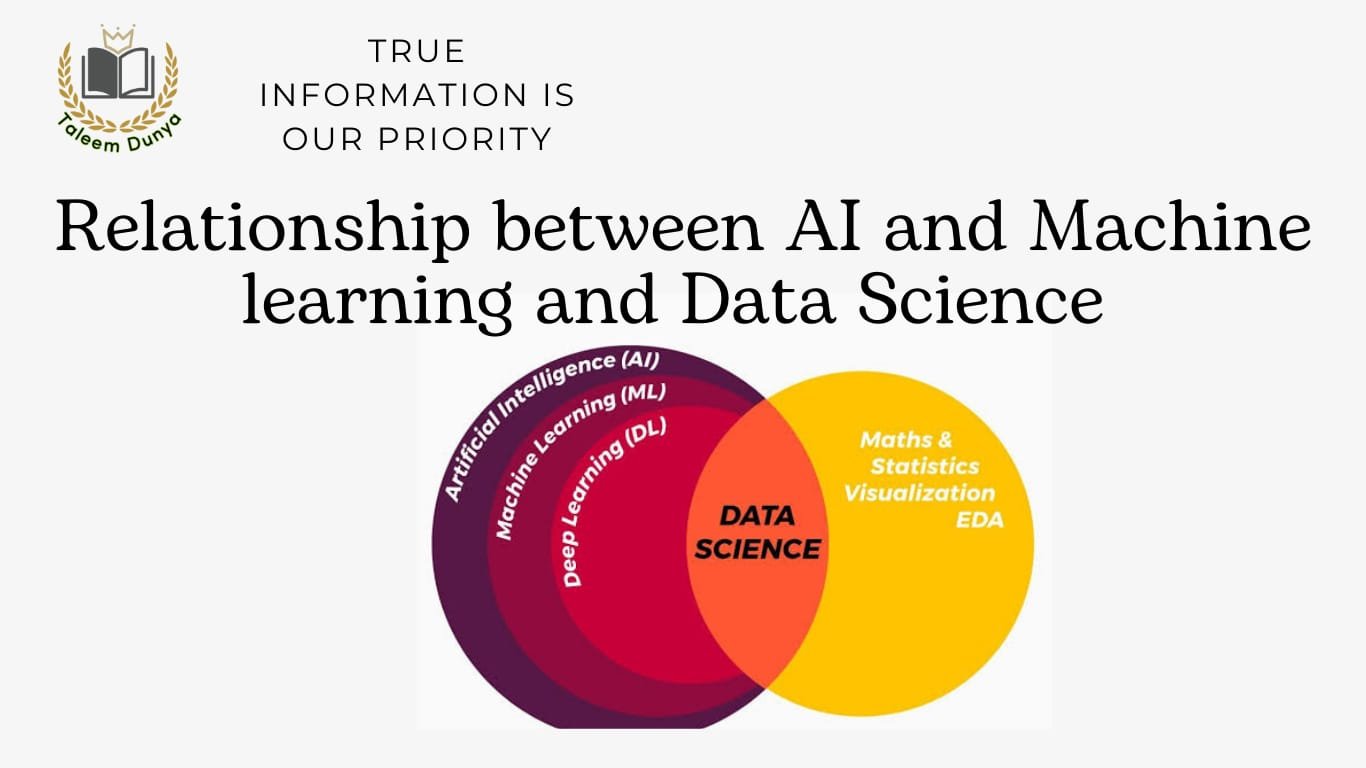
AI Coding Models Are Transforming IT, Web & Software Development Industry in 2026

The IT, web and software development industry is entering one of its biggest transformations in decades. The introduction of advanced AI coding models, AI coding assistants and autonomous coding agents is changing how developers write software, build websites, test applications, fix bugs and manage large codebases.

AI is no longer limited to suggesting a few lines of code. Modern AI coding systems can understand requirements, generate complete features, analyze existing projects, write tests, identify bugs, refactor code and, increasingly, work through longer software-development tasks with limited human intervention.

Recent industry research shows how quickly this change is happening. GitHub reported that more than 97% of respondents in its 2024 survey had used AI coding tools at work or outside work, while JetBrains reported in its 2025 Developer Ecosystem Survey that 85% of developers regularly use AI tools for coding and development.
AI Coding Models Are Changing Software Development

Traditional software development required developers to manually write most of the application code. Developers spent significant time searching documentation, writing repetitive functions, debugging errors, creating test cases, converting requirements into code, and maintaining existing applications.

AI coding models have changed this workflow. Developers can now describe a requirement using natural language and ask an AI system to generate a function, API, database query, frontend component, backend service, test case, or complete application structure. This has significantly reduced the amount of repetitive coding required from developers.

The role of the developer is therefore moving from simply "writing code" toward understanding requirements, designing systems, reviewing AI-generated code, testing applications, managing security, and making important technical decisions.

The Rise of AI-Assisted Web Development

Web development is one of the areas experiencing rapid change because modern AI coding tools can work with popular technologies such as HTML, CSS, JavaScript, PHP, Laravel, Python, React, Vue, Node.js, and various database technologies.

A developer can provide a description such as "create a student admission management system with authentication, database tables, REST APIs, and an administrative dashboard," and AI coding tools can generate significant portions of the initial implementation.

This does not mean that professional web developers are becoming unnecessary. Instead, the productivity expectations for developers are increasing. A developer who understands both software engineering fundamentals and AI-assisted development can potentially accomplish much more than a developer who relies exclusively on traditional manual coding.

From AI Copilots to AI Coding Agents

The industry is now moving beyond simple AI coding assistants toward AI coding agents. Traditional AI assistants generally respond to individual prompts, while coding agents can increasingly inspect repositories, modify multiple files, run tests, analyze errors, and make further changes based on feedback.

Research published in 2026 describes coding agents as increasingly capable of working across software repositories and performing longer development workflows. At the same time, researchers emphasize that reliability, safety, maintainability, and effective human supervision remain important challenges.

This represents an important change in software development. Developers are beginning to manage not only code but also AI systems that can perform parts of the development process autonomously.

The Rise of "Vibe Coding"

One of the most discussed trends in modern software development is "vibe coding." The basic idea is that a person describes what they want in natural language and uses AI to generate much of the implementation.

Vibe coding can make software development accessible to people who do not have extensive programming experience. Entrepreneurs, students, designers, business professionals, and small organizations can create prototypes and applications much faster than before.

However, production-quality software still requires engineering discipline. AI-generated code can contain security vulnerabilities, incorrect assumptions, inefficient database queries, poor architecture, or hidden bugs. Therefore, the ability to review and validate generated code remains extremely important.

AI Is Increasing Developer Productivity

One of the strongest arguments for AI coding models is productivity. AI can automate many repetitive tasks, allowing developers to spend more time on complex problems and business requirements.

Developers can use AI to generate boilerplate code, explain unfamiliar codebases, write SQL queries, create unit tests, prepare API documentation, convert code between programming languages, identify potential bugs, and assist with debugging.

Stack Overflow's 2025 survey found that 52% of developers agreed that AI tools or AI agents had a positive effect on their productivity.

Recent research also indicates that AI-assisted development is associated with higher development throughput in some high-velocity open-source projects, although such findings should not be interpreted as proof that AI automatically improves every software team or project.

AI Coding Does Not Eliminate the Need for Programmers

A common misconception is that AI coding models will completely replace software developers. The reality is more complicated.

AI can generate code, but software development is not only about generating code. Professional engineering requires understanding business requirements, system architecture, scalability, security, databases, networking, user experience, deployment, performance, compliance, and long-term maintenance.

An AI model may generate a technically valid function that is completely wrong for the business requirement. A human developer must therefore understand the problem and evaluate whether the solution is appropriate.

The most valuable developers in the AI era will likely be those who can combine strong software engineering fundamentals with effective AI collaboration.

Programming Fundamentals Are Becoming More Important

Interestingly, the growth of AI coding tools may make fundamental programming knowledge even more important.

Developers need to understand algorithms, data structures, object-oriented programming, databases, APIs, operating systems, networking, security, software architecture, Git, testing, and debugging because these skills allow them to evaluate AI-generated solutions.

Stack Overflow's 2025 survey also shows that developers continue to learn new programming techniques and technologies. Sixty-nine percent of developers reported spending time learning new coding techniques or programming languages during the previous year.

AI can accelerate learning, but it does not eliminate the need to understand what the generated code actually does.

The Future of Database Administration and IT Administration

AI is also changing database administration and IT operations. AI-powered systems can assist with SQL generation, query optimization, monitoring, log analysis, incident detection, documentation, and troubleshooting.

Database administrators and IT professionals will increasingly need to understand automation, cloud platforms, cybersecurity, observability, AI infrastructure, and data management alongside traditional administration skills.

The same principle applies to system and network administrators. AI can help analyze logs, identify configuration problems, generate scripts, and automate routine tasks, while experienced administrators remain responsible for architecture, security, availability, and critical decisions.

Cybersecurity Becomes More Important

The rapid growth of AI-generated software also creates new cybersecurity challenges. If organizations generate large quantities of code using AI, they must ensure that the code is properly reviewed and tested.

AI-generated applications may contain insecure authentication, improper authorization, vulnerable dependencies, exposed secrets, unsafe API endpoints, or inadequate input validation.

At the same time, AI agents themselves introduce new security considerations because they may be given access to repositories, development environments, databases, or deployment systems. Current research and industry discussions increasingly emphasize permissions, verification, auditability, and human oversight for agentic systems.

New IT and Software Development Skills

The AI era is creating demand for a new combination of technical skills. Developers should learn how to use AI coding assistants effectively while maintaining strong programming fundamentals.

Important skills include prompt engineering, AI-assisted programming, AI agents, API integration, cloud computing, cybersecurity, DevOps, Git and CI/CD, database management, software architecture, automated testing, and AI-assisted debugging.

Developers should also learn how to verify AI output rather than blindly accepting it. Stack Overflow's 2025 survey found that 46% of developers distrust the accuracy of AI tool output, compared with 33% who trust it.

This trust gap highlights an important principle: AI-generated code should be reviewed, tested, and secured before it is treated as production-ready software.

The Future Role of Software Engineers

The software engineer of the future may spend less time typing repetitive code and more time defining problems, designing systems, coordinating AI agents, reviewing implementations, testing solutions, and ensuring that software meets business and security requirements.

This transformation is similar to what happened with many previous technological advances. Higher-level programming languages did not eliminate programmers; integrated development environments did not eliminate software engineers; cloud computing did not eliminate system administrators. Instead, these technologies changed the skills and workflows required by professionals.

AI is likely to have a similar effect, but potentially at a much greater scale.

Opportunities for IT Professionals

The AI transformation creates significant opportunities for professionals who adapt quickly. Web developers can become AI-enabled application developers. Database administrators can move toward intelligent data platforms and AI data engineering. IT administrators can specialize in AI infrastructure, automation, cloud operations, and cybersecurity. Software engineers can become AI application engineers, AI agent developers, AI integration specialists, or technical architects.

Small companies and startups can also benefit because AI can reduce the time required to build prototypes and launch new products. This may allow smaller teams to compete with organizations that previously required much larger development departments.

Challenges for the Software Industry

Despite its benefits, AI-assisted development introduces serious challenges. Code quality, security, intellectual property, privacy, hallucinations, dependency management, model costs, developer over-reliance, and lack of understanding can create significant risks.

Another challenge is the development of junior programmers. If AI performs too many beginner-level tasks, new developers may have fewer opportunities to learn fundamental programming through practical experience. Organizations and universities will therefore need to rethink how software engineering skills are taught and how junior developers are trained.

The industry must find a balance between automation and human learning.

AI Will Change Jobs, Not Simply Remove Them

The IT industry is likely to experience significant job transformation as AI becomes more capable. Some repetitive programming tasks may require fewer human hours, while new responsibilities will emerge around AI integration, system design, verification, cybersecurity, data engineering, and AI governance.

Google Colab For Research

Google Colab is a free online platform that allows users to write and run code in a Jupyter Notebook environment. Here are the basic steps to get started with Google Colab:

Sign in to your Google account: Go to the Google Colab website (https://colab.research.google.com/) and sign in with your Google account. If you don't have a Google account, you can create one for free.

Create a new notebook: Once you've signed in, you can create a new notebook by clicking on the New notebook button on the left-hand side of the page.

Choose a runtime: Google Colab allows you to choose between two runtimes - CPU and GPU. If your code requires intensive computation, you should choose the GPU option, which is faster than the CPU option.

Write and run your code: Once you've created your notebook, you can start writing and running code. Google Colab supports several programming languages, including Python, R, and Julia.

Save your notebook: Google Colab automatically saves your notebook to your Google Drive account, so you don't have to worry about losing your work. However, it's a good idea to save your notebook manually from time to time to make sure you don't lose any changes you've made.

Share your notebook: If you want to share your notebook with others, you can use the "Share" button at the top of the page to generate a link or add collaborators.

Google Colab also provides access to several pre-installed packages, including popular machine learning libraries like TensorFlow and PyTorch, which can be used to train models on large datasets.

Google Colab use for python
Google Colab is a cloud-based Jupyter notebook environment provided by Google for running Python code. It allows users to create, share, and collaborate on Jupyter notebooks that contain live code, equations, visualizations, and narrative text.

Google Colab provides several benefits for Python users, including:

1) Free access to computing resources, including GPUs and TPUs, which can be used to speed up computations.

2) Easy integration with Google Drive and other Google services, making it simple to access and share data.

3) Support for a wide range of Python libraries and frameworks, including TensorFlow, PyTorch, and Scikit-learn.

4) Collaboration features, allowing multiple users to work on the same notebook in real-time.

5) Seamless integration with GitHub, allowing users to clone and edit repositories directly from Colab.

Overall, Google Colab is a powerful tool for Python users, providing a convenient and flexible platform for data analysis, machine learning, and other computational tasks. One popular application of Google Colab is working with deep learning models, such as Transformers. Transformers are a type of neural network architecture that has become increasingly popular in natural language processing (NLP) tasks, such as language translation, text generation, and sentiment analysis.

Here are some steps to use Google Colab for Python and Transformer:

1) First, go to the Google Colab website and sign in with your Google account.

2) Create a new notebook by clicking on "New Notebook" or "File" like "New Notebook".

3) In the first cell of the notebook, you can install any necessary packages or libraries. For example, you can install the transformers library by running !pip install transformers.

4) Next, you can import the necessary libraries and start coding your Python script. For example, you can import the transformers library with from transformers import pipeline.

5) You can then use the pipeline function to create a pre-trained model for your specific NLP task. For example, you can create a text generation model with generator = pipeline('text-generation', model='gpt2').

6) Finally, you can run your code by clicking on the "Run" button, or by using the keyboard shortcut "Shift+Enter".

Google Colab also has some additional features that are useful for working with deep lea

Real Estate Industrial Trends in Italy: Market Outlook for 2026

Italy's industrial real estate market is entering a more mature phase in 2026. Demand for logistics facilities, warehouses, distribution centers, and modern industrial properties remains strong, while investors are becoming increasingly selective about location, building quality, tenant strength, and long-term income potential.

The latest market data points to a resilient sector. In 2025, Italy's industrial and logistics real estate segment attracted approximately €2.3 billion in investment, representing a 30% year-over-year increase. Leasing activity also reached approximately 2.4 million square meters, up 7% from the previous year.

Momentum continued into 2026. During the first quarter, logistics take-up reached approximately 860,000 square meters, a 78% increase compared with Q1 2025, with third-party logistics (3PL) operators playing an important role in demand.

These figures highlight an important trend: industrial real estate in Italy is no longer simply a secondary commercial property segment. It has become an increasingly strategic component of supply chains, manufacturing, e-commerce, and institutional investment.

Italy Industrial Real Estate Market: An Overview

The Italian industrial real estate market is benefiting from several structural changes in the economy.

Companies are reassessing their supply chains, logistics operators are expanding their networks, manufacturers need modern production facilities, and retailers require efficient distribution infrastructure closer to consumers.

At the same time, investors are showing greater interest in high-quality industrial and logistics properties that can provide stable income and long-term growth potential.

According to Colliers, Italy's logistics investment market recorded approximately €2.13 billion in investment during 2025, while Q4 alone reached €953 million, 70% higher than the same quarter a year earlier.

The market is therefore shifting from rapid expansion toward quality, efficiency, location, and resilience.
2. Milan Continues to Be a Key Industrial and Logistics Hub

Milan and the wider Lombardy region remain among the most important locations for industrial real estate in Italy.

The region benefits from:

  • A large consumer market
  • Strong manufacturing activity
  • Extensive road infrastructure
  • Connections to Northern European markets
  • Major logistics and transportation networks
  • A significant concentration of businesses and distribution operations

Prime industrial and logistics properties around Milan are therefore likely to continue attracting strong tenant and investor interest.

However, land availability and development costs mean that investors increasingly need to evaluate locations beyond the traditional prime submarkets.

3. Rome and Central Italy Gain Strategic Importance

Rome is another important market for industrial and logistics property, particularly because of its large population and role as a major consumption center.

While Northern Italy remains dominant in manufacturing and logistics, Rome and Central Italy can provide attractive opportunities for last-mile distribution and regional fulfillment.

The increasing importance of faster delivery and proximity to consumers is encouraging logistics operators to consider locations closer to major urban areas.

Cushman & Wakefield expects prime rents in both Milan and Rome to continue rising in 2026, although at a more moderate pace as the market moves toward greater balance.

4. E-Commerce Is Reshaping Warehouse Demand

E-commerce continues to influence industrial property requirements.

Modern online retail requires sophisticated logistics networks capable of handling:

  • High order volumes
  • Faster delivery times
  • Returns management
  • Inventory optimization
  • Automated sorting
  • Last-mile distribution

As a result, tenants are increasingly looking for buildings that can support automation, efficient loading operations, adequate power capacity, and strategically located transportation links.

This trend is also increasing the importance of urban and near-urban logistics facilities.

5. The Rise of Modern, High-Quality Industrial Properties

Another major trend is the growing preference for modern industrial buildings.

Not all warehouses and industrial properties are equally attractive to tenants. Older properties may face challenges related to energy efficiency, building specifications, accessibility, loading capacity, or technological infrastructure.

Investors are increasingly focusing on high-quality assets that meet modern occupier requirements.

This creates a potential divide between:

Prime assets:
Modern, energy-efficient buildings in strategic locations with strong tenants.

Secondary assets:
Older buildings or properties in locations with weaker transport connections and limited redevelopment potential.

The result is a growing "flight to quality" within the Italian industrial property market.

6. Sustainability Is Becoming a Core Investment Consideration

Sustainability is no longer simply an environmental consideration for industrial property owners. It is becoming an important factor in asset value, tenant demand, operating costs, and investment decisions.

Modern industrial developments increasingly incorporate:

  • Solar photovoltaic systems
  • Energy-efficient lighting
  • Improved insulation
  • Smart building technologies
  • EV charging infrastructure
  • Water-management systems
  • Sustainable construction materials
  • Energy monitoring systems

For investors, upgrading older buildings to improve energy performance can create opportunities for value-add strategies.

Properties with stronger environmental credentials may also be better positioned to meet the requirements of multinational occupiers and institutional investors.

7. 3PL Companies Are Driving Industrial Property Demand

Third-party logistics companies have become one of the most important occupier groups in Italy's logistics market.

Businesses increasingly outsource transportation, warehousing, inventory management, and fulfillment operations to specialized providers.

This creates demand for flexible logistics facilities that can support multiple clients and changing supply-chain requirements.

The strong role of 3PL operators in recent leasing activity is one reason the Italian industrial and logistics market continues to demonstrate resilient fundamentals. JLL identified 3PL expansion as a significant contributor to Q1 2026 take-up.

8. Investment Activity Is Recovering

Investment is another major indicator of the strength of Italy's industrial real estate sector.

The approximately €2.3 billion invested in industrial and logistics property during 2025 represented a 30% annual increase, according to JLL.

In Q1 2026, the sector attracted approximately €430 million, equivalent to around 12% of total Italian real estate investment volume.

Colliers also reported approximately €415 million of logistics investment in Q1 2026 and noted renewed interest from core investors in high-quality assets.

This suggests that investors are increasingly returning to the sector, although they are concentrating on assets with strong fundamentals rather than treating all industrial properties equally.

9. Prime Rents Are Expected to Remain Supported

Rental growth is another important consideration for industrial property investors.

Cushman & Wakefield expects vacancy to stabilize in 2026 while prime rents in Milan and Rome continue to increase, albeit more moderately than during earlier phases of the market cycle.

JLL reported prime rents of approximately €70 per square meter per year in Q1 2026, with prime yields around 5.3%.

The combination of stable occupancy, constrained supply in strategic locations, and demand for high-quality buildings can support rental performance.

10. Industrial Real Estate Is Becoming More Technology-Driven

Technology is transforming the requirements for industrial properties.

Warehouses are increasingly expected to accommodate automation, robotics, advanced inventory systems, sensors, real-time tracking, and data-driven supply-chain management.

This means future industrial properties will need more than traditional storage space.

They will increasingly need:

  • Reliable high-capacity power
  • Strong digital connectivity
  • Automation-ready layouts
  • Advanced security systems
  • Smart energy management
  • Flexible floor plans
  • Efficient loading and unloading areas

Properties that cannot adapt to these requirements may experience greater functional obsolescence over time.

11. Supply Chain Resilience Is Influencing Property Decisions

Recent global disruptions have encouraged businesses to reconsider how and where they store inventory.

Instead of relying on highly centralized supply chains, companies may seek additional distribution points, larger inventory buffers, or strategically positioned facilities.

Italy's role within European and Mediterranean trade networks makes supply-chain resilience particularly relevant to industrial real estate.

This trend can benefit strategically located warehouses and distribution centers that provide access to multiple transportation routes.

12. Investors Are Becoming More Selective

Although the outlook for Italian industrial real estate remains positive, investors should not assume that every industrial property will deliver the same performance.

The market is increasingly focused on asset quality.

Key factors influencing investment decisions include:

  1. Location
  2. Transport connectivity
  3. Tenant credit quality
  4. Lease duration
  5. Building specifications
  6. Energy efficiency
  7. Development potential
  8. Rental growth prospects
  9. Vacancy risk
  10. Exit liquidity

The strongest opportunities are likely to be found where these fundamentals come together.

13. What Are the Main Risks for Italy's Industrial Real Estate Market?

Despite positive market fundamentals, several risks should be considered.

Economic Uncertainty

Slower economic growth could reduce industrial production, consumer spending, and logistics demand.

Financing Costs

Interest rates and financing conditions can significantly affect property valuations and investment returns.

Construction Costs

Higher construction and land costs can make new industrial developments more expensive.

Infrastructure Constraints

Properties without efficient access to highways, ports, railways, or urban markets may become less competitive.

Obsolescence

Older industrial buildings may require significant capital expenditure to remain competitive with newer facilities.

Oversupply in Specific Locations

While supply remains constrained in many prime areas, localized oversupply can still create vacancy and rental pressure.

14. Outlook for Industrial Real Estate in Italy in 2026 and Beyond

The outlook for Italian industrial real estate remains broadly constructive.

The evidence from 2025 and early 2026 suggests that the market is moving toward a more balanced and mature phase rather than experiencing a simple boom.

Leasing demand remains strong, investment activity has improved, and institutional investors are showing renewed interest in quality logistics assets.

At the same time, market participants are becoming more selective.

The future winners are likely to be properties that combine strategic location, modern specifications, strong connectivity, energy efficiency, flexible design, and reliable tenants.

CBRE reported that total commercial real estate investment in Italy reached approximately €7 billion during the first half of 2026, up 2% year over year, indicating continued overall investment activity across the Italian property market.

Frequently Asked Questions

Is industrial real estate a good investment in Italy?

Industrial and logistics real estate remains an important investment segment in Italy, supported by logistics demand, 3PL expansion, manufacturing, e-commerce, and supply-chain requirements. However, investment performance depends heavily on location, asset quality, tenant strength, and purchase price.

Which Italian cities are important for industrial real estate?

Milan and Rome are among the most important markets, while other strategic logistics and manufacturing locations across Northern and Central Italy can also offer opportunities depending on the property's characteristics and connectivity.

What is driving logistics real estate demand in Italy?

Major drivers include e-commerce, 3PL expansion, manufacturing activity, supply-chain restructuring, consumer demand, and the need for strategically located distribution facilities.

Are industrial property rents increasing in Italy?

Prime rents remain supported in key markets. Cushman & Wakefield expects prime rents in Milan and Rome to continue increasing in 2026, although at a more moderate rate as market conditions become more balanced.

What type of industrial property is most attractive to investors?

Modern, well-located, energy-efficient logistics and industrial properties with strong tenants, long leases, good transport connectivity, and potential for rental growth are generally among the most attractive assets.

Conclusion

The real estate industrial trends in Italy point toward a market characterized by resilience, increasing professionalism, and greater investor selectivity.

Strong logistics demand, 3PL expansion, e-commerce, manufacturing requirements, supply-chain restructuring, sustainability, and technology are transforming Italy's industrial property landscape.

The latest investment and leasing figures demonstrate that industrial and logistics real estate has become a significant part of Italy's commercial property market. With approximately €2.3 billion invested in the sector during 2025 and strong leasing momentum continuing into 2026, the market remains firmly on the radar of institutional investors.

Google Colab For Research

Google Colab is a free online platform that allows users to write and run code in a Jupyter Notebook environment. Here are the basic steps to get started with Google Colab:

Sign in to your Google account: Go to the Google Colab website (https://colab.research.google.com/) and sign in with your Google account. If you don't have a Google account, you can create one for free.

Create a new notebook: Once you've signed in, you can create a new notebook by clicking on the New notebook button on the left-hand side of the page.

Choose a runtime: Google Colab allows you to choose between two runtimes - CPU and GPU. If your code requires intensive computation, you should choose the GPU option, which is faster than the CPU option.

Write and run your code: Once you've created your notebook, you can start writing and running code. Google Colab supports several programming languages, including Python, R, and Julia.

Save your notebook: Google Colab automatically saves your notebook to your Google Drive account, so you don't have to worry about losing your work. However, it's a good idea to save your notebook manually from time to time to make sure you don't lose any changes you've made.

Share your notebook: If you want to share your notebook with others, you can use the "Share" button at the top of the page to generate a link or add collaborators.

Google Colab also provides access to several pre-installed packages, including popular machine learning libraries like TensorFlow and PyTorch, which can be used to train models on large datasets.

Google Colab use for python
Google Colab is a cloud-based Jupyter notebook environment provided by Google for running Python code. It allows users to create, share, and collaborate on Jupyter notebooks that contain live code, equations, visualizations, and narrative text.

Google Colab provides several benefits for Python users, including:

1) Free access to computing resources, including GPUs and TPUs, which can be used to speed up computations.

2) Easy integration with Google Drive and other Google services, making it simple to access and share data.

3) Support for a wide range of Python libraries and frameworks, including TensorFlow, PyTorch, and Scikit-learn.

4) Collaboration features, allowing multiple users to work on the same notebook in real-time.

5) Seamless integration with GitHub, allowing users to clone and edit repositories directly from Colab.

Overall, Google Colab is a powerful tool for Python users, providing a convenient and flexible platform for data analysis, machine learning, and other computational tasks. One popular application of Google Colab is working with deep learning models, such as Transformers. Transformers are a type of neural network architecture that has become increasingly popular in natural language processing (NLP) tasks, such as language translation, text generation, and sentiment analysis.

Here are some steps to use Google Colab for Python and Transformer:

1) First, go to the Google Colab website and sign in with your Google account.

2) Create a new notebook by clicking on "New Notebook" or "File" like "New Notebook".

3) In the first cell of the notebook, you can install any necessary packages or libraries. For example, you can install the transformers library by running !pip install transformers.

4) Next, you can import the necessary libraries and start coding your Python script. For example, you can import the transformers library with from transformers import pipeline.

5) You can then use the pipeline function to create a pre-trained model for your specific NLP task. For example, you can create a text generation model with generator = pipeline('text-generation', model='gpt2').

6) Finally, you can run your code by clicking on the "Run" button, or by using the keyboard shortcut "Shift+Enter".

Google Colab also has some additional features that are useful for working with deep lea

Why Big data is important in Artificial Intelligence

Big Data plays a central role in Artificial Intelligence because modern AI systems depend heavily on large volumes of data to learn, adapt, and make accurate decisions. AI models—especially in areas like machine learning and deep learning—require massive datasets to identify patterns, trends, and relationships. The more data available, the better the model can generalize and improve its predictions. For example, applications such as speech recognition, image classification, and recommendation systems become more accurate when trained on diverse and extensive datasets.
One of the main reasons big data is important is that it improves the accuracy and reliability of AI systems. When models are trained on diverse and massive datasets, they can generalize better and make more precise predictions. For example, applications such as speech recognition, recommendation systems, and medical diagnosis rely heavily on large datasets to function effectively. Big data also enables real-time processing, allowing AI systems to make instant decisions in dynamic environments like autonomous driving or financial trading.

What is Big Data?

Big Data refers to extremely large and complex datasets that cannot be easily processed, stored, or analyzed using traditional data processing tools. It involves data that is generated rapidly from multiple sources such as social media, sensors, mobile devices, and business transactions.

Explanation of Big Data


Data Sources

Big Data comes from multiple sources such as:

Social media platforms

IoT devices and sensors

Online transactions

Websites and mobile apps


Types of Big Data

Structured Data: Organized (databases, tables)

Unstructured Data: Raw data (images, videos, text)

Semi-structured Data: JSON, XML files


Technologies Used

Big Data requires special tools and frameworks like:

Hadoop – for distributed storage and processing

Apache Spark – for fast data analysis

NoSQL databases (e.g., MongoDB)


How Big Data Works

Data is collected from various sources

Stored in distributed systems

Processed using parallel computing

Analyzed to extract useful insights


Applications of Big Data

Healthcare (disease prediction)

Banking (fraud detection)

E-commerce (recommendation systems)

Smart cities and traffic management


Big Data is Implemented Using AI


Data Collection

Big Data is gathered from multiple sources such as:

Social media

Sensors and IoT devices

Websites and mobile apps

AI systems can automatically collect and organize this data efficiently.


Data Storage and Management

Because data is huge, it is stored in distributed systems using tools like:

Hadoop

Apache Spark

AI helps optimize storage by identifying useful vs unnecessary data.


Data Processing

AI algorithms process large datasets quickly:

Cleaning data (removing errors)

Transforming data into usable format

Handling structured and unstructured data

This step is crucial before analysis.


Data Analysis using AI Models

AI techniques such as:

Machine Learning

Deep Learning

Natural Language Processing

Example: Predicting customer behavior from shopping data.


Decision Making & Prediction

AI uses insights from Big Data to:

Make automated decisions

Provide recommendations

Predict future trends

Example:

Fraud detection in banking

Disease prediction in healthcare

Real-Time Processing

AI enables real-time analysis of Big Data:

Live traffic monitoring

Stock market prediction

Smart systems (e.g., smart cities)

Google Colab For Research

Google Colab is a free online platform that allows users to write and run code in a Jupyter Notebook environment. Here are the basic steps to get started with Google Colab:

Sign in to your Google account: Go to the Google Colab website (https://colab.research.google.com/) and sign in with your Google account. If you don't have a Google account, you can create one for free.

Create a new notebook: Once you've signed in, you can create a new notebook by clicking on the New notebook button on the left-hand side of the page.

Choose a runtime: Google Colab allows you to choose between two runtimes - CPU and GPU. If your code requires intensive computation, you should choose the GPU option, which is faster than the CPU option.

Write and run your code: Once you've created your notebook, you can start writing and running code. Google Colab supports several programming languages, including Python, R, and Julia.

Save your notebook: Google Colab automatically saves your notebook to your Google Drive account, so you don't have to worry about losing your work. However, it's a good idea to save your notebook manually from time to time to make sure you don't lose any changes you've made.

Share your notebook: If you want to share your notebook with others, you can use the "Share" button at the top of the page to generate a link or add collaborators.

Google Colab also provides access to several pre-installed packages, including popular machine learning libraries like TensorFlow and PyTorch, which can be used to train models on large datasets.

Google Colab use for python
Google Colab is a cloud-based Jupyter notebook environment provided by Google for running Python code. It allows users to create, share, and collaborate on Jupyter notebooks that contain live code, equations, visualizations, and narrative text.

Google Colab provides several benefits for Python users, including:

1) Free access to computing resources, including GPUs and TPUs, which can be used to speed up computations.

2) Easy integration with Google Drive and other Google services, making it simple to access and share data.

3) Support for a wide range of Python libraries and frameworks, including TensorFlow, PyTorch, and Scikit-learn.

4) Collaboration features, allowing multiple users to work on the same notebook in real-time.

5) Seamless integration with GitHub, allowing users to clone and edit repositories directly from Colab.

Overall, Google Colab is a powerful tool for Python users, providing a convenient and flexible platform for data analysis, machine learning, and other computational tasks. One popular application of Google Colab is working with deep learning models, such as Transformers. Transformers are a type of neural network architecture that has become increasingly popular in natural language processing (NLP) tasks, such as language translation, text generation, and sentiment analysis.

Here are some steps to use Google Colab for Python and Transformer:

1) First, go to the Google Colab website and sign in with your Google account.

2) Create a new notebook by clicking on "New Notebook" or "File" like "New Notebook".

3) In the first cell of the notebook, you can install any necessary packages or libraries. For example, you can install the transformers library by running !pip install transformers.

4) Next, you can import the necessary libraries and start coding your Python script. For example, you can import the transformers library with from transformers import pipeline.

5) You can then use the pipeline function to create a pre-trained model for your specific NLP task. For example, you can create a text generation model with generator = pipeline('text-generation', model='gpt2').

6) Finally, you can run your code by clicking on the "Run" button, or by using the keyboard shortcut "Shift+Enter".

Google Colab also has some additional features that are useful for working with deep lea

History of T20 World. Most important movements of T20 World Cup from 2007 to 2026.

The first-ever T20 World Cup was held in South Africa and completely changed the future of cricket.

2007 – ICC World Twenty20 (South Africa)

The first-ever T20 World Cup was held in South Africa and completely changed the future of cricket. Young players like Yuvraj Singh became global stars after hitting six sixes in an over against England. The final between India and Pakistan became historic, where MS Dhoni led India to victory. This tournament made T20 cricket popular worldwide and later inspired leagues like the IPL.

2009 – ICC World Twenty20 (England)

Pakistan won their first T20 World Cup under captain Younis Khan. In the final, Pakistan defeated Sri Lanka with a brilliant all-round performance by Shahid Afridi. This victory was very emotional for Pakistan cricket fans and restored pride after the 2007 final loss.

2010 – ICC World Twenty20 (West Indies)

England won their first ICC trophy by defeating Australia in the final. Kevin Pietersen was one of the key performers. This tournament showed England’s improvement in the shorter format and marked a new era in English white-ball cricket.

2012 – ICC World Twenty20 (Sri Lanka)

The West Indies lifted their first T20 World Cup title by defeating Sri Lanka in the final. Marlon Samuels played a match-winning innings. The tournament is also remembered for the rise of Chris Gayle as the “Universe Boss” of T20 cricket.

2014 – ICC World Twenty20 (Bangladesh)

Sri Lanka finally won their first T20 World Cup after finishing runners-up twice. Kumar Sangakkara scored a brilliant 52* in the final against India. This victory was a perfect farewell gift for Sangakkara and Mahela Jayawardene in T20 internationals.

2016 – ICC World Twenty20 (India)

West Indies became the first team to win two T20 World Cups. The final is remembered for Carlos Brathwaite hitting four consecutive sixes in the last over against England. Ben Stokes was the bowler in that dramatic finish.

2021 – ICC Men's T20 World Cup (UAE & Oman)

Australia won their first-ever T20 World Cup by defeating New Zealand in the final. Mitchell Marsh and David Warner were key players. This tournament was postponed from 2020 due to COVID-19.

2022 – ICC Men's T20 World Cup (Australia)

England became the second team after West Indies to win two T20 titles. In the final, Ben Stokes played a match-winning innings against Pakistan. England held both the ODI (2019) and T20 (2022) World Cups at the same time.

2024 – ICC Men's T20 World Cup (USA & West Indies)

This tournament was historic because it was the first ICC event hosted by the USA. India won the title by defeating South Africa in a thrilling final. Virat Kohli played a crucial innings, while Jasprit Bumrah was outstanding with the ball. It marked India’s second T20 World Cup title after 2007.

2026 – ICC Men's T20 World Cup (India & Sri Lanka)

The 2026 T20 World Cup is scheduled to be hosted by India and Sri Lanka. It is expected to feature strong competition among top teams like India, Pakistan, England, Australia, and New Zealand. The tournament continues to expand globally, promoting T20 cricket in new regions and attracting millions of fans worldwide.

Google Colab For Research

Google Colab is a free online platform that allows users to write and run code in a Jupyter Notebook environment. Here are the basic steps to get started with Google Colab:

Sign in to your Google account: Go to the Google Colab website (https://colab.research.google.com/) and sign in with your Google account. If you don't have a Google account, you can create one for free.

Create a new notebook: Once you've signed in, you can create a new notebook by clicking on the New notebook button on the left-hand side of the page.

Choose a runtime: Google Colab allows you to choose between two runtimes - CPU and GPU. If your code requires intensive computation, you should choose the GPU option, which is faster than the CPU option.

Write and run your code: Once you've created your notebook, you can start writing and running code. Google Colab supports several programming languages, including Python, R, and Julia.

Save your notebook: Google Colab automatically saves your notebook to your Google Drive account, so you don't have to worry about losing your work. However, it's a good idea to save your notebook manually from time to time to make sure you don't lose any changes you've made.

Share your notebook: If you want to share your notebook with others, you can use the "Share" button at the top of the page to generate a link or add collaborators.

Google Colab also provides access to several pre-installed packages, including popular machine learning libraries like TensorFlow and PyTorch, which can be used to train models on large datasets.

Google Colab use for python
Google Colab is a cloud-based Jupyter notebook environment provided by Google for running Python code. It allows users to create, share, and collaborate on Jupyter notebooks that contain live code, equations, visualizations, and narrative text.

Google Colab provides several benefits for Python users, including:

1) Free access to computing resources, including GPUs and TPUs, which can be used to speed up computations.

2) Easy integration with Google Drive and other Google services, making it simple to access and share data.

3) Support for a wide range of Python libraries and frameworks, including TensorFlow, PyTorch, and Scikit-learn.

4) Collaboration features, allowing multiple users to work on the same notebook in real-time.

5) Seamless integration with GitHub, allowing users to clone and edit repositories directly from Colab.

Overall, Google Colab is a powerful tool for Python users, providing a convenient and flexible platform for data analysis, machine learning, and other computational tasks. One popular application of Google Colab is working with deep learning models, such as Transformers. Transformers are a type of neural network architecture that has become increasingly popular in natural language processing (NLP) tasks, such as language translation, text generation, and sentiment analysis.

Here are some steps to use Google Colab for Python and Transformer:

1) First, go to the Google Colab website and sign in with your Google account.

2) Create a new notebook by clicking on "New Notebook" or "File" like "New Notebook".

3) In the first cell of the notebook, you can install any necessary packages or libraries. For example, you can install the transformers library by running !pip install transformers.

4) Next, you can import the necessary libraries and start coding your Python script. For example, you can import the transformers library with from transformers import pipeline.

5) You can then use the pipeline function to create a pre-trained model for your specific NLP task. For example, you can create a text generation model with generator = pipeline('text-generation', model='gpt2').

6) Finally, you can run your code by clicking on the "Run" button, or by using the keyboard shortcut "Shift+Enter".

Google Colab also has some additional features that are useful for working with deep lea
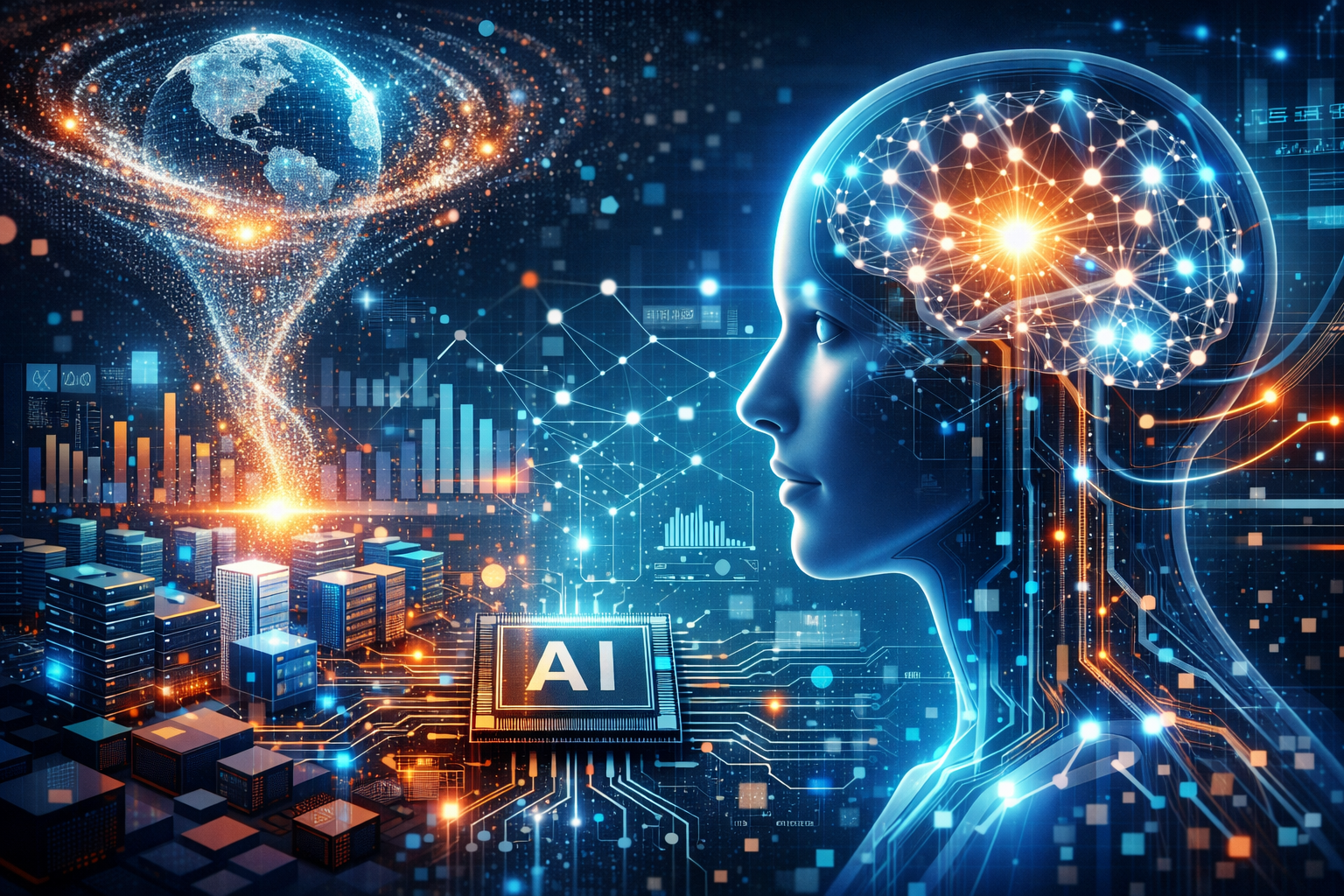
Future Trends of Artificial Intelligence Using Big Data

Artificial Intelligence (AI) is the simulation of human intelligence in machines, enabling them to perform tasks that typically require human cognitive abilities, such as learning, reasoning, problem-solving, perception, and decision-making. AI systems utilize algorithms and computational models to process data, identify patterns, and make predictions or decisions autonomously. These systems range from basic rule-based programs to advanced machine learning and deep learning models that continuously improve their performance by learning from data.

AI using Big Data involves the integration of sophisticated AI algorithms with massive and complex datasets, allowing systems to learn, adapt, and make intelligent decisions. By analyzing vast amounts of structured and unstructured data such as text, images, sensor inputs, and transactional records, AI models can identify patterns, predict outcomes, and automate tasks with remarkable accuracy. For instance, machine learning and deep learning techniques process Big Data to enable personalized recommendations in e-commerce, real-time fraud detection in finance, predictive maintenance in manufacturing, and disease diagnosis in healthcare. Big Data serves as the foundation for training robust AI systems, while AI transforms raw data into actionable insights. This synergy drives innovation across industries, though it also necessitates robust data infrastructure, ethical governance, and advanced tools like cloud computing and neural networks to address challenges related to scalability, privacy, and computational demands. Ultimately, AI powered by Big Data is reshaping how organizations operate, innovate, and deliver value in a data-driven world.

Advanced AI Models and Algorithms

Sophistication through Scale in AI models, such as transformers and generative adversarial networks (GANs), achieve greater accuracy and capabilities by leveraging larger datasets. This trend enables breakthroughs in natural language processing (NLP), computer vision, and generative AI. The concept of sophistication through scale refers to the significant improvement in AI system performance as they are trained on increasingly larger datasets and scaled up in terms of computational resources and model complexity. This is made possible by the availability of massive datasets (Big Data) and advancements in hardware (e.g., GPUs, TPUs) and algorithms (e.g., deep learning, transformers). For example, large language models like GPT-4 or Gemini demonstrate exceptional accuracy and versatility by training on extensive text corpora, enabling tasks such as language translation, content generation, and natural language understanding. Similarly, computer vision models trained on millions of images achieve human-level performance in object recognition and image classification.

Real-Time Processing systems are increasingly integrated with streaming data platforms like Apache Kafka to enable instant decision-making in applications such as fraud detection, autonomous systems, and the Internet of Things (IoT). Real-time processing in AI refers to the ability of systems to analyze and act on data as it is generated, ensuring immediate responses. This capability is crucial in fields like autonomous driving, healthcare monitoring, and industrial automation, where delays are unacceptable. Real-time AI relies on high-speed data processing frameworks (e.g., Apache Kafka, Apache Flink) and edge computing to minimize latency, delivering insights or actions within milliseconds. For instance, autonomous vehicles process sensor data in real time to navigate and avoid obstacles, while financial systems detect fraudulent transactions as they occur. Real-time processing combines streaming data with advanced machine learning models, enabling dynamic adaptation to changing conditions. However, it requires robust infrastructure, efficient algorithms, and low-latency networks to handle the volume, velocity, and variety of data.

Edge AI and Decentralized Learning

Edge AI and decentralized learning are transforming data processing and analysis by bringing computation closer to the source of data generation, rather than relying solely on centralized cloud systems. Edge AI involves deploying AI models directly on devices like smartphones, IoT sensors, and autonomous vehicles, enabling real-time decision-making with minimal latency. This is particularly critical for applications such as smart cities, industrial automation, and healthcare monitoring, where immediate responses are essential. Decentralized learning, including techniques like federated learning, allows AI models to be trained across multiple devices or servers without transferring raw data to a central location. This approach enhances data privacy, reduces bandwidth usage, and enables collaboration across organizations while complying with regulations like GDPR. For example, hospitals can collaboratively train AI models on patient data without sharing sensitive information. Together, Edge AI and decentralized learning address key challenges in Big Data, such as scalability, latency, and privacy, enabling more efficient and secure AI deployments.

Industry-Specific Transformations

AI using Big Data is revolutionizing industries by enabling intelligent decision-making and automation through the analysis of vast datasets. In healthcare, AI analyzes electronic health records, genomic data, and medical imaging to enable personalized treatments and early disease detection. In finance, Big Data powers fraud detection, risk assessment, and algorithmic trading by processing real-time transaction data and market trends. Retail benefits from AI-driven demand forecasting, inventory optimization, and hyper-personalized customer experiences using purchase history and behavioral data. In manufacturing, predictive maintenance and supply chain optimization are achieved through sensor data and IoT integration, reducing downtime and costs. Transportation sees advancements in route optimization, autonomous vehicles, and traffic management by analyzing GPS, weather, and traffic data. Meanwhile, the energy sector uses AI to optimize grid management and renewable energy forecasting by processing data from smart meters and environmental sensors.

Data Management Innovations

Data management innovations in AI using Big Data are transforming how organizations collect, store, process, and utilize vast amounts of data to power artificial intelligence systems. These innovations address challenges related to scalability, complexity, and efficiency in handling Big Data, enabling AI models to deliver more accurate and actionable insights.

Quantum AI and High-Performance Computing

Quantum AI and high-performance computing (HPC) represent the next frontier in computational power, enabling the processing of complex problems at unprecedented speeds. Quantum AI leverages principles of quantum mechanics, such as superposition and entanglement, to perform computations that are infeasible for classical computers. This has the potential to revolutionize AI by solving optimization problems, simulating molecular structures, and enhancing machine learning algorithms exponentially faster. For example, quantum algorithms like Grover's and Shor's could dramatically accelerate tasks such as drug discovery, cryptography, and large-scale data analysis. Meanwhile, HPC complements AI by providing the massive parallel processing capabilities needed to train large-scale models and analyze vast datasets. HPC systems, equipped with GPUs and TPUs, are already powering breakthroughs in deep learning, natural language processing, and climate modeling.

Multimodal and Autonomous Systems

Multimodal and autonomous systems represent a cutting-edge frontier where AI systems integrate and process multiple types of data—such as text, images, audio, and sensor inputs—to achieve a more comprehensive understanding of complex environments. These systems leverage Big Data to train models that can simultaneously interpret and correlate diverse data streams, enabling richer insights and more human-like decision-making. For example, autonomous vehicles combine visual data from cameras, LiDAR, and radar with real-time traffic information to navigate safely, while healthcare systems analyze medical images, patient records, and genomic data to provide personalized diagnoses.

By 2030, AI powered by Big Data will drive unprecedented efficiency and innovation. However, its societal impact will depend on addressing ethical, technical, and accessibility challenges. Cross-sector collaboration and investment in education will be key to democratizing the benefits of AI.

Google Colab For Research

Google Colab is a free online platform that allows users to write and run code in a Jupyter Notebook environment. Here are the basic steps to get started with Google Colab:

Sign in to your Google account: Go to the Google Colab website (https://colab.research.google.com/) and sign in with your Google account. If you don't have a Google account, you can create one for free.

Create a new notebook: Once you've signed in, you can create a new notebook by clicking on the New notebook button on the left-hand side of the page.

Choose a runtime: Google Colab allows you to choose between two runtimes - CPU and GPU. If your code requires intensive computation, you should choose the GPU option, which is faster than the CPU option.

Write and run your code: Once you've created your notebook, you can start writing and running code. Google Colab supports several programming languages, including Python, R, and Julia.

Save your notebook: Google Colab automatically saves your notebook to your Google Drive account, so you don't have to worry about losing your work. However, it's a good idea to save your notebook manually from time to time to make sure you don't lose any changes you've made.

Share your notebook: If you want to share your notebook with others, you can use the "Share" button at the top of the page to generate a link or add collaborators.

Google Colab also provides access to several pre-installed packages, including popular machine learning libraries like TensorFlow and PyTorch, which can be used to train models on large datasets.

Google Colab use for python
Google Colab is a cloud-based Jupyter notebook environment provided by Google for running Python code. It allows users to create, share, and collaborate on Jupyter notebooks that contain live code, equations, visualizations, and narrative text.

Google Colab provides several benefits for Python users, including:

1) Free access to computing resources, including GPUs and TPUs, which can be used to speed up computations.

2) Easy integration with Google Drive and other Google services, making it simple to access and share data.

3) Support for a wide range of Python libraries and frameworks, including TensorFlow, PyTorch, and Scikit-learn.

4) Collaboration features, allowing multiple users to work on the same notebook in real-time.

5) Seamless integration with GitHub, allowing users to clone and edit repositories directly from Colab.

Overall, Google Colab is a powerful tool for Python users, providing a convenient and flexible platform for data analysis, machine learning, and other computational tasks. One popular application of Google Colab is working with deep learning models, such as Transformers. Transformers are a type of neural network architecture that has become increasingly popular in natural language processing (NLP) tasks, such as language translation, text generation, and sentiment analysis.

Here are some steps to use Google Colab for Python and Transformer:

1) First, go to the Google Colab website and sign in with your Google account.

2) Create a new notebook by clicking on "New Notebook" or "File" like "New Notebook".

3) In the first cell of the notebook, you can install any necessary packages or libraries. For example, you can install the transformers library by running !pip install transformers.

4) Next, you can import the necessary libraries and start coding your Python script. For example, you can import the transformers library with from transformers import pipeline.

5) You can then use the pipeline function to create a pre-trained model for your specific NLP task. For example, you can create a text generation model with generator = pipeline('text-generation', model='gpt2').

6) Finally, you can run your code by clicking on the "Run" button, or by using the keyboard shortcut "Shift+Enter".

Google Colab also has some additional features that are useful for working with deep lea

Dark psychology techniques

Dark psychology refers to the study of the human condition in relation to the psychological nature of people who prey on others. It encompasses various tactics used to manipulate, control, and influence others for personal gain, often at the expense of the victim's well-being. Here are some commonly cited dark psychology techniques: Gaslighting: Manipulating someone into questioning their own reality, memory, or perceptions. This can make the victim feel confused, anxious, and unable to trust their own judgment. NLP (Neuro-Linguistic Programming): Using language and communication techniques to subtly influence someone's thoughts and behaviors. While NLP can have positive uses, it can also be misused for manipulation. Love Bombing: Overwhelming someone with affection, attention, and admiration to gain control over them. Once the victim is emotionally dependent, the manipulator may withdraw affection to maintain control. Guilt Tripping: Making someone feel guilty to manipulate their actions or decisions. This technique plays on the victim's sense of duty, loyalty, or empathy. Silent Treatment: Deliberately ignoring or excluding someone to make them feel insignificant or guilty, thereby gaining control over their emotions and actions. Triangulation: Involving a third person in a relationship or conflict to create jealousy, rivalry, or competition, which the manipulator uses to control and divide people. Projection: Accusing someone else of having the negative traits or behaviors that the manipulator possesses. This diverts attention from the manipulator's flaws and makes the victim doubt themselves. Playing the Victim: Pretending to be the victim to gain sympathy, support, or avoid blame. This can manipulate others into feeling sorry for the manipulator and giving them what they want. Devaluation: Undermining someone's self-esteem by criticizing, belittling, or demeaning them. This makes the victim more dependent on the manipulator for validation and approval. Isolation: Cutting someone off from their support network of friends, family, and colleagues to make them more dependent on the manipulator.

Google Colab For Research

Google Colab is a free online platform that allows users to write and run code in a Jupyter Notebook environment. Here are the basic steps to get started with Google Colab:

Sign in to your Google account: Go to the Google Colab website (https://colab.research.google.com/) and sign in with your Google account. If you don't have a Google account, you can create one for free.

Create a new notebook: Once you've signed in, you can create a new notebook by clicking on the New notebook button on the left-hand side of the page.

Choose a runtime: Google Colab allows you to choose between two runtimes - CPU and GPU. If your code requires intensive computation, you should choose the GPU option, which is faster than the CPU option.

Write and run your code: Once you've created your notebook, you can start writing and running code. Google Colab supports several programming languages, including Python, R, and Julia.

Save your notebook: Google Colab automatically saves your notebook to your Google Drive account, so you don't have to worry about losing your work. However, it's a good idea to save your notebook manually from time to time to make sure you don't lose any changes you've made.

Share your notebook: If you want to share your notebook with others, you can use the "Share" button at the top of the page to generate a link or add collaborators.

Google Colab also provides access to several pre-installed packages, including popular machine learning libraries like TensorFlow and PyTorch, which can be used to train models on large datasets.

Google Colab use for python
Google Colab is a cloud-based Jupyter notebook environment provided by Google for running Python code. It allows users to create, share, and collaborate on Jupyter notebooks that contain live code, equations, visualizations, and narrative text.

Google Colab provides several benefits for Python users, including:

1) Free access to computing resources, including GPUs and TPUs, which can be used to speed up computations.

2) Easy integration with Google Drive and other Google services, making it simple to access and share data.

3) Support for a wide range of Python libraries and frameworks, including TensorFlow, PyTorch, and Scikit-learn.

4) Collaboration features, allowing multiple users to work on the same notebook in real-time.

5) Seamless integration with GitHub, allowing users to clone and edit repositories directly from Colab.

Overall, Google Colab is a powerful tool for Python users, providing a convenient and flexible platform for data analysis, machine learning, and other computational tasks. One popular application of Google Colab is working with deep learning models, such as Transformers. Transformers are a type of neural network architecture that has become increasingly popular in natural language processing (NLP) tasks, such as language translation, text generation, and sentiment analysis.

Here are some steps to use Google Colab for Python and Transformer:

1) First, go to the Google Colab website and sign in with your Google account.

2) Create a new notebook by clicking on "New Notebook" or "File" like "New Notebook".

3) In the first cell of the notebook, you can install any necessary packages or libraries. For example, you can install the transformers library by running !pip install transformers.

4) Next, you can import the necessary libraries and start coding your Python script. For example, you can import the transformers library with from transformers import pipeline.

5) You can then use the pipeline function to create a pre-trained model for your specific NLP task. For example, you can create a text generation model with generator = pipeline('text-generation', model='gpt2').

6) Finally, you can run your code by clicking on the "Run" button, or by using the keyboard shortcut "Shift+Enter".

Google Colab also has some additional features that are useful for working with deep lea